In home-based elderly care, life care is one of the most fundamental services. For some elderly individuals, they have lost their ability to take care of themselves and require assistance with their daily lives. At this point, professional caregivers are needed to provide life care services.
Life care primarily encompasses daily life assistance such as feeding, grooming, dressing, and toileting. For the elderly, these aspects of life care constitute their most fundamental needs and are the most critical areas that require attention. Professional caregivers are essential to provide these services.
In terms of diet, nursing staff need to develop a dietary plan based on the physical condition of the elderly to ensure their dietary nutrition is balanced. Additionally, in terms of diet, nursing staff also need to pay attention to the dietary hygiene of the elderly to ensure food safety and hygiene.
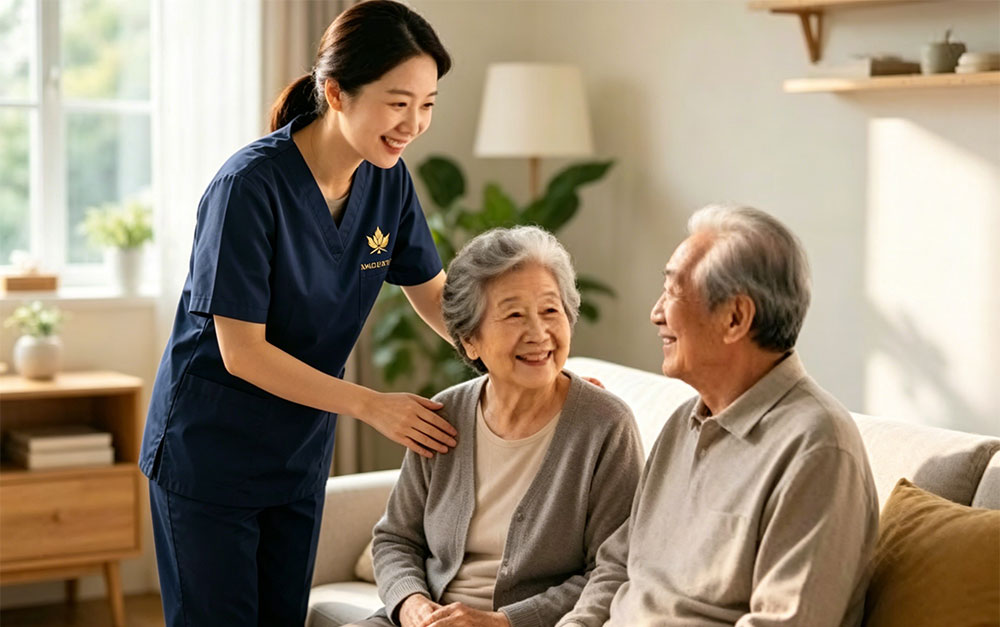
In terms of grooming, nursing staff need to assist the elderly with daily grooming tasks, including washing their faces, brushing their teeth, and taking a bath, to maintain their physical cleanliness and health. Nursing staff also need to provide necessary care, such as trimming the elderly's fingernails and pedicures.
In terms of dressing, nursing staff need to assist the elderly in getting dressed and undressed, ensuring their clothing is neat and comfortable.
In terms of using the toilet, nursing staff need to assist the elderly with toileting and cleaning to ensure their physical health and comfort.
Life care is one of the most fundamental services in home-based elderly care, and it is also the most basic need in the lives of the elderly. Nursing staff need to provide appropriate life care services based on the physical condition of the elderly, ensuring that they can enjoy a comfortable life.
Nursing staff work attire change.jpg
II. Health Monitoring is a crucial service in home-based elderly care. As the elderly age, their physical health becomes increasingly unstable. Monitoring their health status becomes particularly important. So, what aspects does home-based elderly care's health monitoring service encompass?
The health monitoring service for home-based elderly care includes monitoring the physical condition of the elderly. In monitoring the physical condition of the elderly, caregivers need to pay attention to changes in the elderly's physical condition and record them in a timely manner. For example, monitoring the blood pressure, blood sugar, body temperature, and other aspects of the elderly is an important part of this. The records of these monitoring contents can help doctors understand the physical condition of the elderly in a timely manner and take corresponding measures in a timely manner,
The health monitoring services for home-based elderly care also encompass the monitoring of the emotional state of the elderly. In this aspect, caregivers need to pay attention to the emotional changes of the elderly and record them promptly. For instance, monitoring the emotional state and sleep quality of the elderly is a crucial aspect. Recording these monitoring details can assist doctors in promptly understanding the emotional state of the elderly and taking corresponding measures in a timely manner, thereby safeguarding their mental health.
The health monitoring service for home-based elderly care also encompasses medication management for the elderly. Given that the elderly may require long-term medication and management for their physical conditions, medication management is a crucial task. In managing medications, caregivers must assist the elderly in taking their medication appropriately as per the doctor's instructions, and promptly record their medication usage to prevent cross-medication or improper use,
Lastly, the health monitoring service for home-based elderly care also encompasses dietary management for the elderly. Diet is a crucial aspect of human health, and dietary management for the elderly deserves special attention. In dietary management, caregivers need to monitor the elderly's eating habits, promptly record their dietary preferences and taste preferences, and provide them with a nutritionally balanced diet plan based on their physical condition,
Health monitoring services for home-based elderly care are a crucial service, encompassing various aspects such as the physical and emotional well-being of the elderly, medication management, and dietary management. The provision of these services can assist the elderly and their families in better managing the physical health of the elderly, enabling them to enjoy their later years in the comfort of their own homes.
III. Emotional Care The service content of home-based elderly care and nursing encompasses not only daily care and health monitoring but also emotional care. For the elderly, emotional care is particularly crucial. As they age, many elderly individuals may encounter issues such as loneliness, loss, and helplessness. At such times, a warm embrace of care can bring them immense comfort and warmth.
Emotional care encompasses aspects such as communication, companionship, concern, and comfort with the elderly. During the process of accompanying the elderly, we can provide some simple entertainment activities, such as listening to music, watching TV, chatting, and so on. At the same time, we can also pay attention to the elderly's mental state, promptly detect their emotional changes, and provide guidance and comfort.
When communicating with the elderly, we need to listen more and respect their wishes and needs, as they often place greater emphasis on their emotional needs. We can establish communication by asking about their life experiences, hobbies, and other topics. At the same time, we should also pay attention to the inner world of the elderly, respect their privacy and personal space, and refrain from arbitrarily interfering with their lives.
When elderly individuals face significant events such as illness or the loss of loved ones, we should offer them more care and comfort. We can accompany them to the hospital for medical treatment, providing them with psychological support and care, so that they feel less lonely and helpless. After the elderly have lost their loved ones, we can accompany them through this difficult time, offering them comfort and encouragement.
Emotional care is an indispensable part of home-based elderly care. Only by respecting the needs and emotions of the elderly can we truly provide comprehensive services and care for them.
IV. Social Interaction Social interaction is a crucial aspect of home-based elderly care and nursing services. Due to reasons such as loneliness and limited social circles, elderly individuals often lack social interaction, which can negatively impact their physical and mental health. Providing social interaction services can assist the elderly in better integrating into society and enhance their quality of life.
Social interaction can help the elderly expand their social circles. Elderly people who age at home often have a smaller social range, often limited to family members and neighbors. By providing social interaction services, such as organizing activities for the elderly and community garden tours, the elderly can meet more people and expand their social circles.
Social interaction is beneficial for the elderly to maintain a positive mindset. During social interaction, the elderly can express their emotions and needs through communication with others, thereby reducing psychological stress and maintaining a positive mindset.
Social interaction can also help the elderly maintain physical and mental health. If elderly individuals lack social interaction for a long time, they are prone to problems such as depression and insomnia. Through social interaction, the elderly can receive psychological comfort, thereby maintaining their physical and mental health.
Lastly, social interaction enables the elderly to integrate better into society. It not only allows them to expand their social circle but also enables them to better understand social conditions, thereby facilitating their integration into society and enabling them to play their part in it.
Social interaction is a crucial aspect of home-based elderly care and nursing services. Providing social interaction services can help the elderly expand their social circles, maintain a positive mindset, and keep both their physical and mental health in good condition. It also enables the elderly to integrate better into society, thereby enhancing their quality of life.